Waterproofing
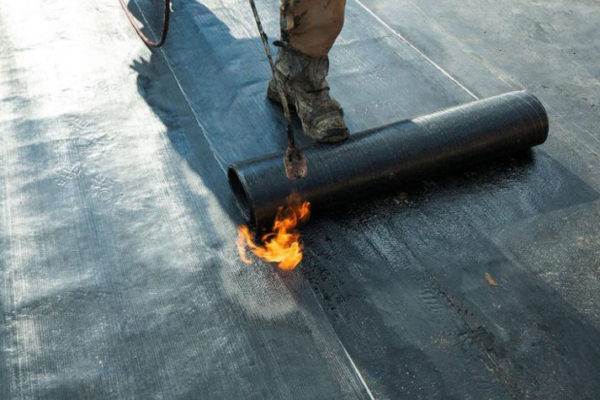
A waterproofing membrane is a thin layer of water-tight material that is laid over a surface. This layer is continuous and does not allow water to pass through it. Waterproofing membrane could be laid above the structural slab and below the finish tiles. The tiles and membrane must be laid over a filler material that is sloped to ensure that water flows into sumps and drains. Any water that remains as puddles over the tiles is likely to seep into the slab over time, so puddles are to be avoided at all costs.
WATER PROOFING SERVICES
Our vision is to emerge as one of the top best Organization providing specialized services for the Construction Industry, with an excellent quality to create new value, excite and delight our customers through the best qualified services in the Industry. We accept new challenge and constantly deliver quality and solutions. After careful study and assessment of the structure, we provide detailed report of the nature and extent of damage and advice the best technique to fix the problem with our quality services. Our customer support provides the well timed support to the customers by signifying with the technically greater and most economical solutions.
CRYSTALLINE CHEMICAL COATING
From foundations, floor slabs and exterior precast panels, to water treatment facilities and underground urban infrastructure, concrete is one of the most commonly used building and construction materials. However, due to its composition, a mixture of rock, sand, cement, and water, concrete is often susceptible to damage and deterioration from water and chemical penetration. These deleterious effects can be avoided through the use of crystalline waterproofing technology, which effectively improves the durability and lifespan of concrete structures, thereby reducing long-term maintenance costs. This article explores how crystalline technology provides a high level of performance to concrete mixtures, materials, and structures, and what design professionals need to know in order to specify and understand how this chemical technology will enhance building projects.
ACRYLIC POLYMER BASED CHEMICAL COATING
The adhesion and hardness characteristics of our water-based acrylic polymers allow for bonding to a diversity of substrates. When used in the formulation of acrylic resins, they offer remarkable resistance qualities to all types of exposure, including chemicals, water and alkaline cleaners. An acrylic resin made with Gellner Industrial polymers can also be used to replace harsh chemical solvents in acrylic coatings allowing for more environmentally-friendly products.
MEMBRANE WATERPROOFING
A waterproofing membrane is a thin layer of water-tight material that is laid over a surface. This layer is continuous and does not allow water to pass through it. Waterproofing membrane could be laid above the structural slab and below the finish tiles. The tiles and membrane must be laid over a filler material that is sloped to ensure that water flows into sumps and drains. Any water that remains as puddles over the tiles is likely to seep into the slab over time, so puddles are to be avoided at all costs.
POLYURETHANE & POLYUREA WATERPROOFING
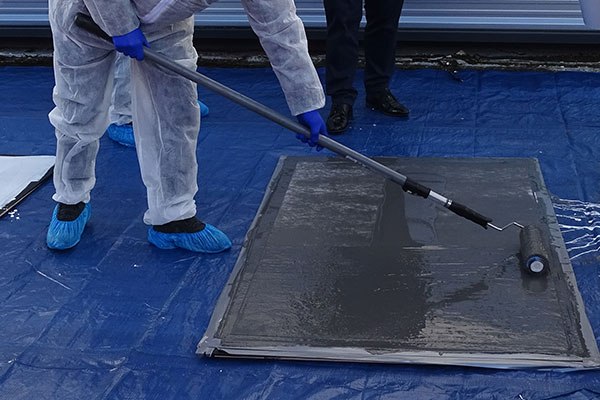
Polyurethane is made up of two components, base and reactor. Polyol acts as the base, while isocyanide is the reactor component. The combination of both these in a specific design ratio creates a liquid coating for waterproofing applications. Polyurethane is a rather popular choice due to its ease of installation. Unlike other waterproofing systems like sheet membranes and liquid applied membranes, this polyurethane application requires comparatively less skill and supervision. Application is fast and this type of treatment can be used for post construction applications aswell.
BITUMEN CHEMICAL COATING
Bituminous coating is a type of coating used to build a vapor-proof and flexible protective coat in accordance with its formulation and polymerization grade. Its flexibility and protection against vapor and water can be influenced by the polymer grade as well as reinforcement of fiber.
The most common applications of bituminous coatings include areas that are beneath screed wet. It is an excellent protective coating and waterproofing agent, especially on surfaces such as concrete foundations.
ACRYLIC POLYMER BASED CHEMICAL COATING
The adhesion and hardness characteristics of our water-based acrylic polymers allow for bonding to a diversity of substrates. When used in the formulation of acrylic resins, they offer remarkable resistance qualities to all types of exposure, including chemicals, water and alkaline cleaners. An acrylic resin made with Gellner Industrial polymers can also be used to replace harsh chemical solvents in acrylic coatings allowing for more environmentally-friendly products.